
What the science says about cellular energy, NR, NMN and healthy ageing
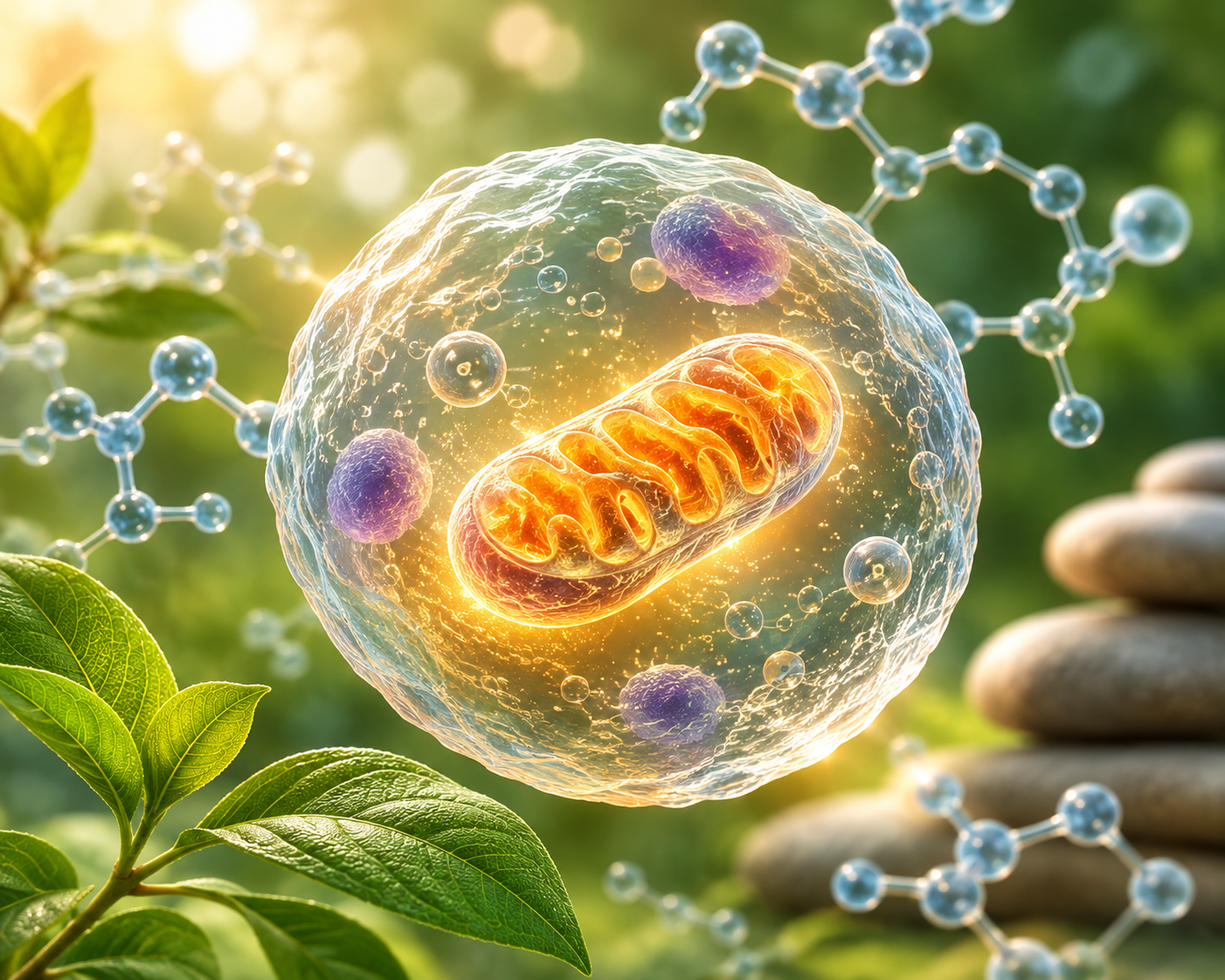
Illustration: a cell and mitochondrion, representing the cellular processes in which NAD+ plays a role.
A tiny molecule with a big job
Nicotinamide adenine dinucleotide, usually shortened to NAD+, is present in every living cell. It is not a vitamin or a hormone, but a coenzyme: a helper molecule that allows many essential chemical reactions to take place.
NAD+ is central to the way cells handle energy. It helps transfer electrons during metabolism, supporting the processes that allow mitochondria to produce ATP, the cell’s usable energy. NAD+ is also consumed by enzymes involved in cell signalling, stress responses and DNA repair, including sirtuins and PARP enzymes.
Because NAD+ metabolism changes with age in several tissues, scientists are investigating whether restoring NAD+ availability might help preserve aspects of cellular function. The idea is biologically plausible. The harder question is whether raising NAD+ in people actually makes them healthier or live longer.
What happens to NAD+ as we get older?
Studies in animals and humans suggest that NAD+ availability can decline with age, although the pattern is not identical in every tissue or person. Inflammation, changes in metabolism, reduced production and increased consumption may all contribute. Researchers are still working out how much these changes matter in normal human ageing.
A lower NAD+ measurement is not, by itself, a diagnosis. Nor is there yet a simple, widely accepted blood test that tells an otherwise healthy person what their ideal NAD+ level should be.
NR and NMN: two ways to supply building blocks
The body can make NAD+ through several biochemical pathways. Two compounds marketed as NAD+ precursors are receiving particular attention:
• Nicotinamide riboside (NR): a form of vitamin B3-related compound that cells can use in the NAD+ production pathway.
• Nicotinamide mononucleotide (NMN): another intermediate in NAD+ production. Cells can convert it into NAD+ through the relevant metabolic pathway.
Human trials show that oral NR and NMN can raise NAD-related markers in blood or cells. That is evidence that the supplements reach and affect the intended biochemical pathway. It is not proof that they improve energy, prevent disease, sharpen memory or extend lifespan.
There is no convincing head-to-head evidence establishing that NR is generally better than NMN, or vice versa. Studies use different populations, doses, durations and measurements, making simple comparisons unreliable.
Do higher NAD+ levels translate into better health?
This is where enthusiasm needs to meet evidence. A 2026 systematic review covering 33 human intervention studies found that NR and NMN generally increased NAD-related biomarkers and were usually tolerated over weeks to months. However, results for health outcomes such as physical function, metabolism and vascular health were mixed, inconsistent or limited to particular endpoints. The reviewers concluded that clinical effectiveness for anti-ageing and wellness remains unproven.
Animal experiments are often encouraging, with reported effects on metabolism, inflammation and function. But animal findings do not automatically translate into benefits for people. Larger, longer human trials are needed, using outcomes that matter to everyday life—not just a higher laboratory number.
A particularly important brain-health reality check
A 2026 double-blind pilot trial studied NR in older adults with amnestic mild cognitive impairment. After 12 weeks, the NR group had approximately twice the blood NAD+ level, but the study did not find a significant improvement in its main cognitive outcome, overall cerebral blood flow or blood pressure. An exploratory signal in blood flow to part of the hippocampus needs confirmation.
This is a useful example of why a raised biomarker should not be confused with a proven treatment. NAD+ supplements have not been shown to prevent or treat Alzheimer’s disease or other causes of memory loss.
New or worsening memory or language difficulties deserve a medical assessment rather than a trial of supplements. Some causes of cognitive symptoms are treatable, and a clinician can review medicines, sleep, mood, hearing, vitamin levels and other possible contributors.
Can lifestyle support NAD+ metabolism?
Lifestyle habits are a sensible foundation for healthy ageing, even though evidence that any one habit reliably raises NAD+ in every human tissue is still developing.
• Move regularly. Aerobic activity and resistance exercise support metabolic health, cardiovascular fitness, muscle and mitochondrial function. These benefits are worthwhile whether or not a measurable NAD+ increase occurs.
• Eat a varied, nutrient-rich diet. Vitamin B3 (niacin) is needed to make NAD+. Sources include mushrooms, peanuts, legumes, whole grains and fish. The body can also make NAD+ from tryptophan, an amino acid found in many protein foods.
• Protect sleep and regular daily rhythms. Consistent sleep supports overall metabolic and brain health. Circadian biology and NAD+ metabolism interact, but sleep should not be presented as a proven NAD+ booster.
• Avoid smoking and excessive alcohol, and limit highly processed, sugar-rich foods. These choices support long-term health; they are not a guaranteed way to raise NAD+.
What about dosage, safety and IV treatments?
There is no established NR or NMN dose for longevity, memory protection or general anti-ageing. Clinical trials have tested a wide range of doses and durations, but a dose used in a study is not automatically a recommendation for the public.
Short-term studies have generally found oral NR and NMN to be reasonably well tolerated, but long-term safety, effects in people with multiple medical conditions, and interactions with medicines are not yet fully understood. Product quality and purity can also vary.
High-dose niacin supplements are not interchangeable with ordinary food sources of vitamin B3. Nicotinic acid can cause flushing and, at high doses, liver injury and other adverse effects. Do not take high-dose B3 or combine NAD+ products without medical advice.
IV NAD+ infusions are promoted by some wellness clinics, but there is no good clinical-outcome evidence that they slow ageing or improve general wellness. The 2026 systematic review found no eligible clinical-outcome trials of IV or intramuscular NAD+ itself for anti-ageing or wellness indications.
A practical, evidence-aware approach
For most people interested in healthy ageing, the sensible order is:
1. Build a consistent routine of aerobic activity and strength training.
2. Eat a varied diet that supplies vitamin B3 and other essential nutrients.
3. Prioritise sleep, avoid smoking and keep alcohol moderate or avoid it.
4. Treat NR or NMN as experimental supplements—not established longevity treatments. Discuss them with a healthcare professional before use, especially if you take medicines or have a chronic condition.
5. Judge success by meaningful outcomes such as strength, mobility, blood pressure, metabolic health and quality of life—not by supplement marketing or a single biomarker.
The bottom line
NAD+ is essential to cellular energy metabolism, signalling and DNA repair. NR and NMN can raise NAD-related levels in humans, which makes them scientifically interesting. But current human evidence does not establish that taking them extends life, prevents dementia, or reliably improves energy and physical performance.
The most honest conclusion is also the most useful one: support the foundations of health now, keep an open mind about NAD+ research, and wait for stronger clinical evidence before treating expensive supplements as an anti-ageing solution.
Health information notice
This article is for general educational purposes and is not individual medical advice. Research findings and supplement regulations can change. Consult a qualified healthcare professional before changing your diet, starting supplements or altering medication. Seek prompt medical advice for new or worsening memory, speech or other neurological symptoms.
Selected research and further reading
• Emerging strategies, applications and challenges of targeting NAD+ in the clinic. Nature Aging (2025). https://www.nature.com/articles/s43587-025-00947-6
• NAD+ supplementation for anti-aging and wellness: a PRISMA-guided systematic review of preclinical and clinical evidence (2026). PubMed. https://pubmed.ncbi.nlm.nih.gov/41655607/
• A phase-II randomized controlled pilot study of nicotinamide riboside in older adults with amnestic mild cognitive impairment (2026). PubMed. https://pubmed.ncbi.nlm.nih.gov/42478598/
• Safety and metabolism-related outcomes of oral NMN supplementation in adults: a systematic review and meta-analysis (2026). PubMed. https://pubmed.ncbi.nlm.nih.gov/42514320/
• NIH Office of Dietary Supplements: Niacin – Fact Sheet for Health Professionals. https://ods.od.nih.gov/factsheets/Niacin-HealthProfessional/